
Lung cancer kills more people in Yorkshire than any other cancer — twice as many as breast or prostate cancer combined — but a pioneering Leeds screening programme is helping catch more cases early, when treatment is far more likely to succeed.
The self-request chest X-ray service lets anyone over 40 registered with a Leeds GP walk in for a scan, no appointment or GP referral needed, if they’ve had a persistent cough, breathlessness, unexplained fatigue, loss of appetite or weight, chest pain, coughing blood, or a lump in the neck for more than three weeks.
Scans are available Monday to Friday, 9am to 4pm, at Leeds General Infirmary, St James’s University Hospital, St George’s Centre in Middleton, Wharfedale Hospital and Chapel Allerton Hospital, with Seacroft Hospital offering the service every day from 8am to 6pm.
Encouraging people to come forward sooner
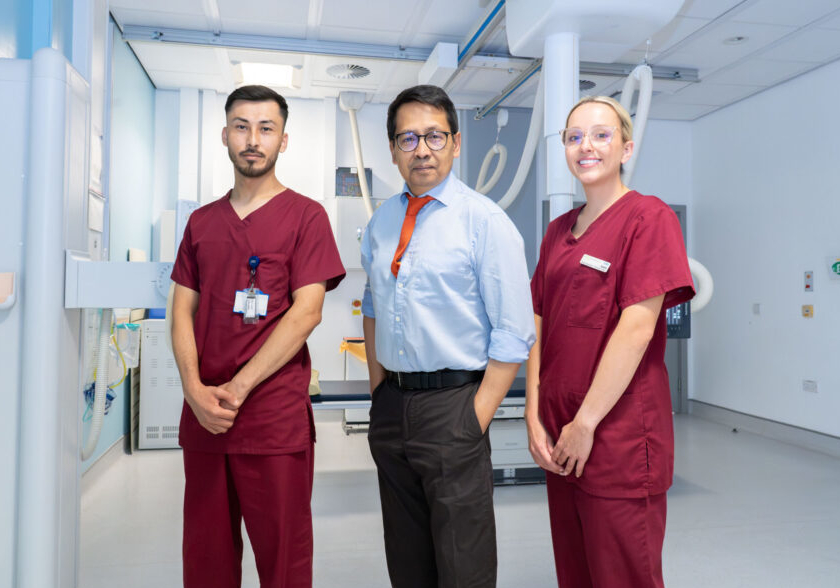
Dr Bobby Bhartia, a Consultant Radiologist at Leeds Teaching Hospitals NHS Trust, said catching lung cancer early is critical, and hopes making testing this straightforward will encourage more people to come forward sooner. He said: “When people think of lung cancer, they often think of smoking.
“What people don’t often realise is that smoking isn’t the only cause of lung cancer. In fact, one in seven people with lung cancer have never smoked. There is a stigma around smoking and its links to lung cancer which can make people with potential cancer reluctant to come forward and see their doctor for fear of being judged. It means getting people to come forward and get tested in the first place is one of our biggest challenges.”
That reluctance is made worse, he said, by the fact lung cancer often produces no early symptoms, or only vague ones like a cough that people don’t think twice about — meaning roughly three-quarters of cases are only picked up at a late stage, when treatment options narrow and survival odds fall.
“People might feel like they are wasting their doctor’s time if they come with a vague symptom, or without any pain,” Dr Bhartia said. “But it’s important to get checked out. It might be nothing, or it might be something else that’s treatable – or it might be lung cancer. The important thing is to get it checked.”
Simple self-request service
The self-request model removes much of that friction, he said: “The self-request service works well because it’s so simple. The idea behind the service is that you can go straight for the test. It cuts out the process of visiting your GP or the need to book an appointment, where things might get delayed.”
Christian, who’d had a cough for three or four weeks, heard about the service from a friend and went to be tested at Seacroft Hospital’s Radiology department. He said: “It only took half an hour, which meant I could quickly step out of work to get it done. When I arrived, I filled out a form and everything was explained to me clearly. Everyone was really friendly and the scan itself took just a couple of minutes.”
He added: “I got a text with the results within a week. Fortunately, there was nothing of concern, but it was a weight off my mind. I think it’s a great idea – it’s really convenient and I’ve been telling everyone about it.”
Dr Bhartia said: “In many ways I think this is how checks for all cancers should work. For lung cancer, it means you don’t need to feel concerned about speaking to a doctor, or feel like you’re wasting someone’s time. It’s one appointment, one test – and you have the results.”
Paused during the pandemic
Leeds Teaching Hospitals first piloted the service several years ago, testing more than 12,000 people before pausing it during the pandemic; it restarted in 2023, and around 3,000 more people have been tested in the two years since. As the first scheme of its kind in the UK, it’s been praised by the Roy Castle Lung Cancer Foundation, which has called for it to be rolled out nationally, and similar pilots have since launched in Manchester, Leicester, Newcastle, London and Birmingham.
Dr Bhartia said: “This is all about improving the early diagnosis of lung cancer. Often, the people who are affected the most are those who struggle the most to get help. By removing the barriers to get tested we’ve made it much more accessible for people to take the opportunity when they can.
“Earlier detection means we can give people the best chance of beating this disease. I want everyone in the Leeds area to know this service is here for you and I’d encourage anyone to get a chest X-ray if you need one.”